.jpg)
Telemedicine has improved access to care—but recovery is still left to patients.
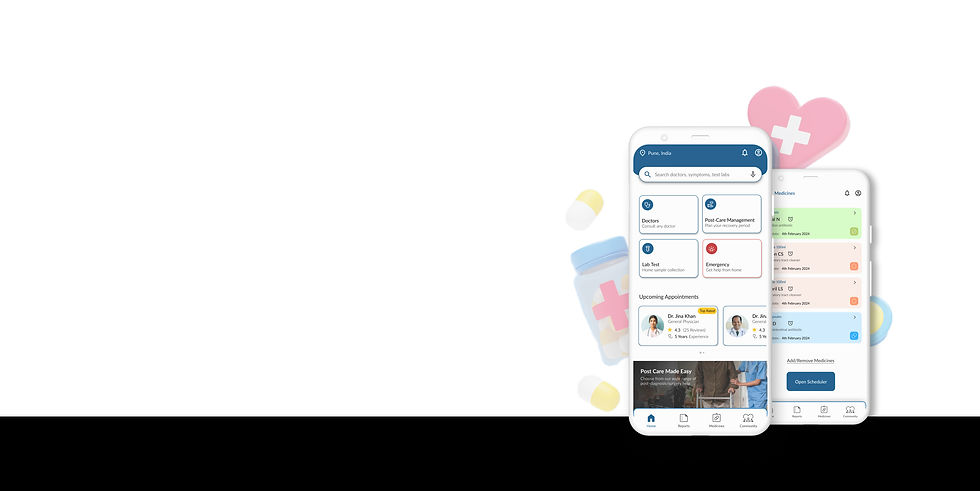
Quickcare is a platform designed to support patients beyond diagnosis and hospital visits.
This Proof Of Concept explores how digital healthcare can extend support into the post-care journey, making recovery safer, simpler, and more connected.
Role :
User Research
Conceptualization
Design
Quickcare
Overview
Post-COVID, the adoption of telemedicine apps has grown significantly, accelerating far beyond initial expectations. While the market has evolved rapidly and offers improved access to care, critical gaps still remain. Particularly in the post-diagnosis and post-operative stages of the patient journey.
Patients often receive limited guidance, support, and continuity of care during recovery, which can lead to confusion, anxiety, and poorer health outcomes.
This case study examines the end-to-end patient journey to identify gaps and opportunities in post-care support and continuity.

The Basics
The Healthcare ecosystem
Primary
Secondary
Tertiary
Patients
Doctors
Nurses
Hospitals/Clinics
Insurance Provider
HCP
Pharma Companies
Smart devices and wearables
.png)
The Survey
Why this matters?
Recovery doesn’t end at diagnosis or discharge.
Patients often navigate uncertainty, anxiety, and fragmented support once they return home.
To understand where care truly breaks down, my teammate and I studied multiple recovery pathways across different conditions.
By mapping condition-based recovery journeys, we identified the moments where patients needed guidance, reassurance, and timely intervention—but rarely received it.
This became the foundation for designing meaningful post-care support.


Temporal
Situational
Permanent

.png)

The personas were divided into three groups, to uncover distinct user needs and design opportunities across varying healthcare journeys.
The Problem
Healthcare doesn’t end when a patient leaves the hospital—but support often does. During post-diagnosis and post-operative recovery, patients are left navigating uncertainty, anxiety, and fragmented care at the moment they need guidance the most.
Real-Time Journey
Ravina, a 22 year old girl was diagnosed with appendicitis after experiencing symptoms. She went through the surgery successfully and was discharged after 6 days and was given 9 medicines and a follow up after 10 days. She experienced re-occurrence of symptoms the next day after discharge and had to consult a different doctor again in the waiting period, doctor changes few meds.

Patients need the most amount of help in the post operative /
diagnosis phase

Insights
Managing complex medication routines is overwhelming

Recovery lacks continuity between discharge and
follow-up

Physical reports and prescriptions are difficult to track and store
Patients seek reassurance from others with similar conditions

Home healthcare remains underrepresented in digital solutions

Post-care is the most vulnerable phase of the patient journey
Emergency support is often unavailable when patients need it most

Focus Areas
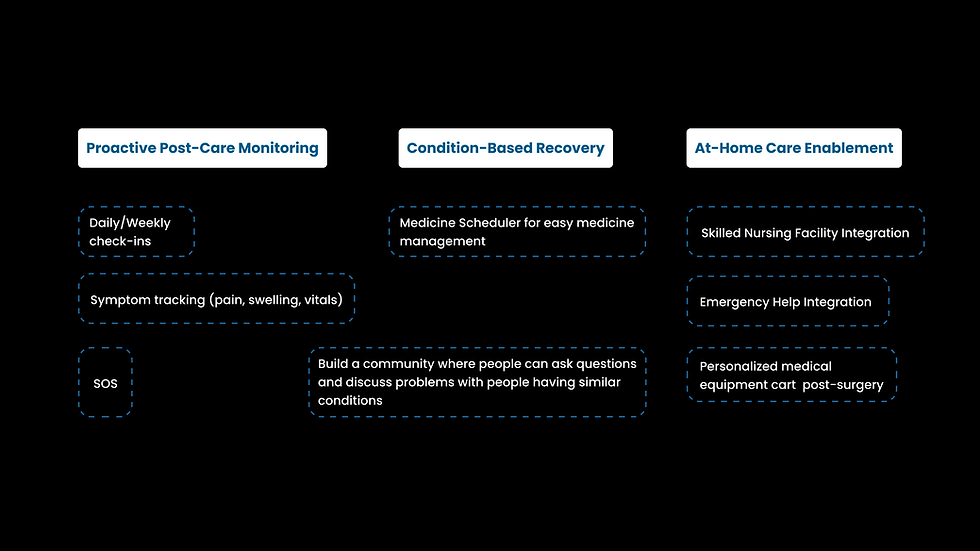
Healthcare support should extend beyond diagnosis and consultations, ensuring patients are guided throughout their recovery journey.
Patients dealing with health conditions need interfaces that reduce cognitive load and provide clarity when making decisions.
Recovery should not require unnecesary hospital visits. Care services should be easily accessible from the comfort of the patient's home
Accessible Care at Home
Simplicity During Vulnerability
Continuity of Care

.png)
What did we implement!?

Patient Centric Solution
Several apps focus more on doctors and hospitals, leaving patient-centered care underexplored.
We try to create a ecosystem which looks at healthcare holistically.
.png)



Daily Check Report
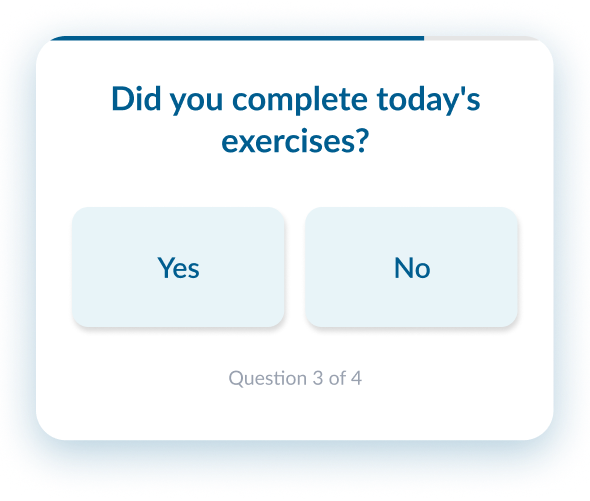
Track daily recovery through quick check-ins on symptoms, medication, and activity.
Identify early warning signs and stay on top of your healing progress.
Peace of mind, one check at a time.
Quick Help at Home
Designed for the post-care phase, this feature enables patients to book trained nurses at home with ease.
It eliminates the unnecessary need for hospital visits during recovery, reducing stress and effort.
Care continues in a familiar, comfortable environment,
right at home.


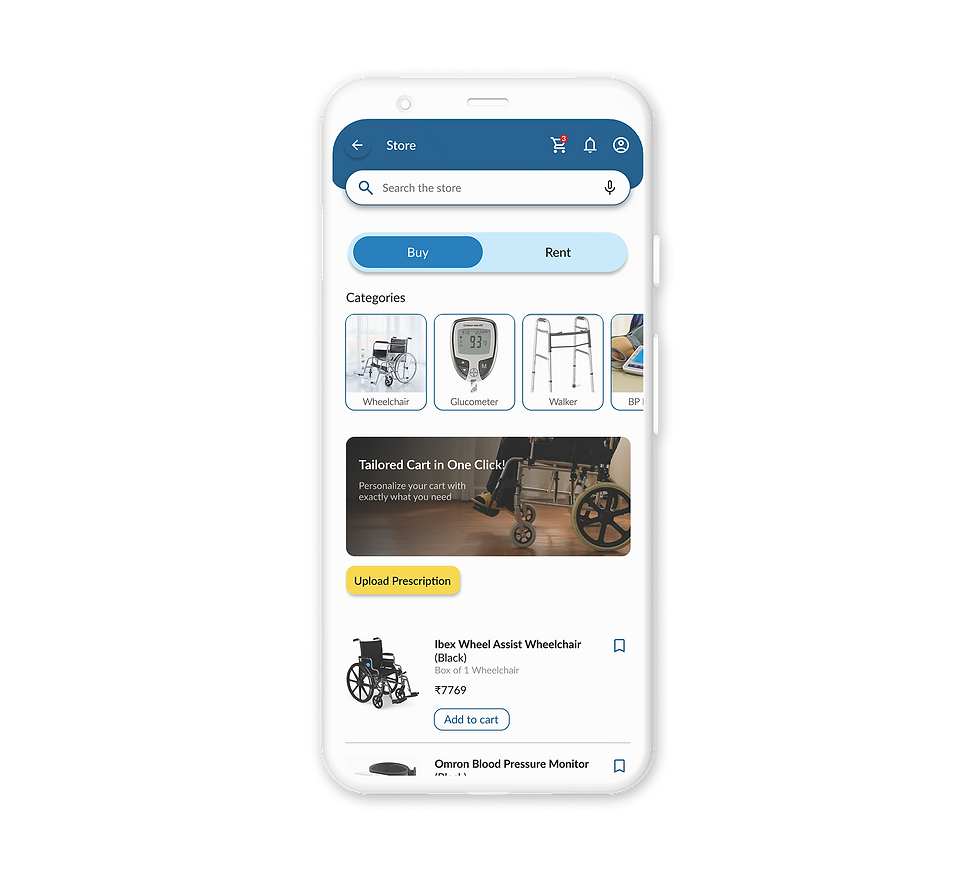
Rent or Buy from the endless stocks of post care equipments (e.g. Wheelchair, Walkers, BP Monitors)
It eliminates the need for buying an equipment for a temporal condition which will be cured in a month maybe!
Care essentials,
without the commitment.
Tailored Cart for every post care needs
Scheduler
This feature helps patients manage complex medication schedules during post-care and recovery.
Clear reminders, dosage details, and timing reduce confusion and missed doses.
Medication adherence becomes simple, reliable, and stress-free.
Patients feel safe and in control during recovery

Projected Metrics

Reduced time to access medical services

Improved medication adherence

Higher patient satisfaction during post-care recovery
Takeaway
Healthcare today is optimized for diagnosis and consultation, but recovery—the longest and most vulnerable phase of the patient journey—remains largely unsupported. Patients returning home after treatment face fragmented care, complex medication routines, and uncertainty about their recovery progress.
Nearly 70% of post-operative care happens at home, yet most digital healthcare products focus primarily on consultations rather than recovery support.
This research revealed a clear opportunity:
Designing healthcare that extends beyond the hospital, supporting patients continuously through their recovery journey.